

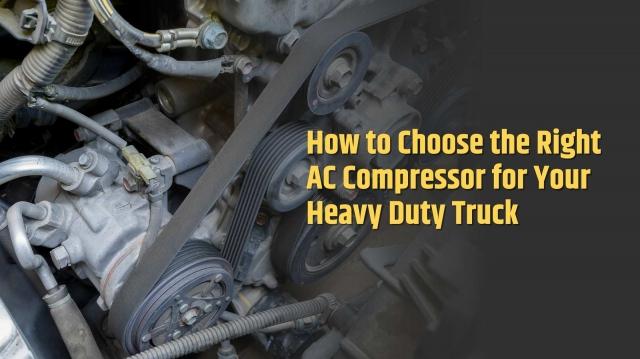
How to Choose the Right AC Compressor for Your Heavy Duty Truck
A reliable AC system is essential for any heavy-duty truck, especially for long-haul drivers who spend hours behind the wheel in demanding weather conditions. At the center of the cooling system is the AC compressor, responsible for circulating refrigerant and maintaining cabin comfort. Choosing the right AC compressor for your heavy-duty truck ensures dependable performance, prevents breakdowns, and improves overall driving efficiency.
Whether you are replacing a worn-out compressor or upgrading to a more efficient model, understanding the key factors to consider will help you make a smart purchasing decision.
What Does an AC Compressor Do in a Heavy-Duty Truck?
The AC compressor is the heart of the truck's air conditioning system. Its primary job is to compress and circulate refrigerant through the system, enabling heat to be removed from the cabin and cooled air to flow. Without a functioning compressor, the AC will blow warm air or fail completely.
Since heavy-duty trucks operate in extreme conditions and run for long periods, the compressor must be durable, efficient, and compatible with the AC system's requirements.
Signs You Need a New Truck AC Compressor
Before choosing a replacement, you should confirm whether you need one. Common signs include:
• AC blowing warm or inconsistent air
• Loud grinding, squealing, or rattling noises when the AC is on
• Refrigerant leaks or visible oil near the compressor
• AC clutch not engaging
• Frequent cycling on and off
• Loud grinding, squealing, or rattling noises when the AC is on
• Refrigerant leaks or visible oil near the compressor
• AC clutch not engaging
• Frequent cycling on and off
If you notice any of these symptoms, it is likely time to inspect or replace your compressor.
Key Factors to Consider When Choosing an AC Compressor
Selecting the right compressor is important for performance, efficiency, and long-term reliability. Here are the major considerations.
1. Compatibility With Your Truck Model
Every truck has specific AC system requirements. The compressor must fit the manufacturer specifications for:
• Mounting configuration
• Voltage and power requirements
• Pulley size and groove count
• Electrical connections
• Refrigerant type (typically R134a or R1234yf)
• Voltage and power requirements
• Pulley size and groove count
• Electrical connections
• Refrigerant type (typically R134a or R1234yf)
Always verify part numbers and check the compatibility list to avoid installation issues.
2. OEM or Aftermarket: Which is Better?
OEM compressors are built by the original manufacturer to match the exact specifications of the truck. Aftermarket options may vary in quality and performance, depending on the brand.
Many truck owners prefer OEM compressors for:
• Longer life expectancy
• Better build quality
• Reliable performance under extreme conditions
• Warranty and tested fit
• Better build quality
• Reliable performance under extreme conditions
• Warranty and tested fit
Reputable OEM AC compressor brands include Denso and Sanden, known for their technology, durability, and industry trust.
3. Type of Compressor
There are different compressor types used in trucks:
• Fixed displacement compressors: Provide a steady output and are common in older truck systems.
• Variable displacement compressors: Adjust automatically to cooling demand, improving efficiency and reducing fuel usage.
• Electric drive compressors: Used in hybrid and electric vehicles, powered independently from the engine.
Choosing the wrong type can lead to poor efficiency or mechanical problems.
4. Quality and Material Construction
High-quality components make a significant difference in performance lifespan. Look for:
• Durable internal components such as hardened steel
• Sealed bearings to prevent leakage
• Corrosion-resistant housings
• Factory tested reliability
• Sealed bearings to prevent leakage
• Corrosion-resistant housings
• Factory tested reliability
Cheap compressors may fail sooner and cost more in repeated repairs.
5. Cooling Capacity and Performance Requirements
Heavy-duty trucks often work in high-temperature environments and haul heavy loads. The AC compressor must deliver strong cooling power without straining the engine.
Performance factors to evaluate:
• Maximum pressure rating
• Refrigerant flow capacity
• Thermal efficiency
• Engine load impact
• Refrigerant flow capacity
• Thermal efficiency
• Engine load impact
6. Warranty and Service Support
A solid warranty protects you from manufacturing defects and early failures. OEM compressors from brands such as Denso, Sanden, Valeo, T/CCI, and Que typically offer better warranty coverage than low-cost aftermarket options.
Also consider supplier support, return policy, and availability of replacement parts.
7. Cost vs. Value
The cheapest compressor is rarely the best choice. Instead of focusing on initial price, consider long-term value, including:
• Durability
• Reduced downtime
• Fuel efficiency
• Maintenance savings
• Reduced downtime
• Fuel efficiency
• Maintenance savings
A premium compressor can easily pay for itself through reliable performance.
Why Choosing the Right Compressor Matters
The air conditioning system affects more than just comfort. Benefits of the correct compressor include:
• Improved driver focus and safety
• Better fuel economy under climate control load
• Reduced wear on engine and AC components
• Enhanced cabin air quality and ventilation
• Lower repair frequency and downtime
• Better fuel economy under climate control load
• Reduced wear on engine and AC components
• Enhanced cabin air quality and ventilation
• Lower repair frequency and downtime
A poorly matched compressor can cause system damage, overheating, and costly breakdowns.
Top Trusted Brands for Heavy Duty Truck AC Compressors
When choosing a replacement, trusted OEM manufacturers offer proven reliability and excellent engineering. Popular brands include:
Denso
- Known for long-life components and leading cooling technology.
- Widely recognized for consistent cooling output and dependable performance, Denso air compressors are a preferred choice among fleet owners.
T/CCI
- Preferred for heavy-duty fleet performance and rugged environments.
- Designed to withstand demanding operating conditions while delivering powerful and stable AC system pressure.
Valeo
- Respected worldwide for high efficiency and OEM integration.
- Engineered to support reduced energy consumption and smoother operation for long route drivers.
Que
- Reliable performance with strong durability.
- Valued for its balance of affordability and endurance, making it ideal for both independent operators and fleet managers.
Sanden
- Innovation is focused and commonly used in commercial trucks and buses.
- Well known for low noise, vibration control, and excellent thermal management in high temperature regions.
Final Thoughts
Choosing the right AC compressor for your heavy-duty truck is crucial for performance, comfort, and long-term cost efficiency. By understanding your truck requirements, selecting a reliable brand, and considering long-term durability, you can ensure your AC system performs well in every driving condition.