

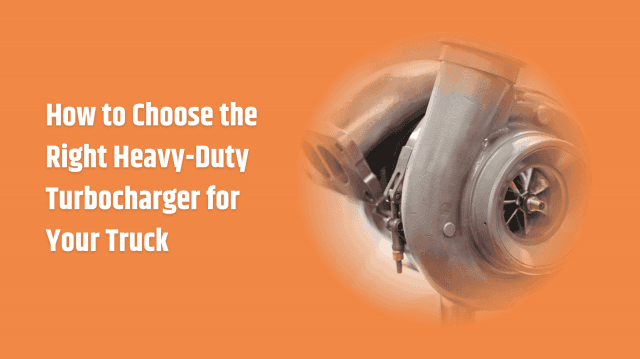
When it comes to keeping your truck running at peak performance, few components play a more critical role than the turbocharger. A heavy-duty turbocharger can significantly enhance power output, improve fuel efficiency, and prolong overall engine life. However, with numerous options available, selecting the right turbocharger for your truck can be a daunting task. This guide will walk you through the key factors to consider, ensuring you make the best decision for your needs.
Why Turbochargers Are Essential for Heavy-Duty Trucks
Turbochargers compress the air entering your truck's engine, allowing it to burn more fuel and produce more power. For heavy-duty trucks that frequently haul large loads or operate in demanding environments, the right turbocharger not only boosts performance but also contributes to fuel savings and improved emissions control. Choosing wisely ensures your truck operates smoothly while reducing costly downtime.
7 Tips to Choose the Right Heavy-Duty Turbocharger for Your Truck
1. Know Your Truck's Engine Requirements
Not every turbocharger is designed to work with every engine. Start by checking your truck's manufacturer specifications, including engine model, displacement, and horsepower requirements. Installing the wrong turbo can lead to poor performance, overheating, or even engine damage. Always ensure the turbocharger you select is compatible with your engine design.
2. Consider the Workload and Application
How you use your truck should guide your choice of turbocharger.
- Long-Haul Driving – Opt for a turbocharger optimized for both fuel efficiency and durability.
- Heavy Towing/Hauling – Look for turbos that provide maximum torque at lower RPMs.
- Stop-and-Go Urban Routes – Opt for turbocharged engines with quick spool times for improved acceleration.
Matching the turbocharger to your work environment will maximize both performance and reliability.
3. OEM vs. Aftermarket Turbochargers
You will often need to choose between OEM (Original Equipment Manufacturer) and aftermarket options.
- OEM Turbochargers – Provide guaranteed compatibility, factory-tested reliability, and strong warranties.
- Aftermarket Turbochargers – May offer performance upgrades at a lower cost but require careful vetting for quality.
If dependability and long-term performance are the top priorities, OEM is often the safer choice. However, trusted aftermarket brands can also deliver excellent results if you are seeking specific upgrades.
4. Material and Build Quality
Durability is critical in heavy-duty turbochargers. Look for options made with high-grade alloys and advanced cooling technologies. Features such as reinforced turbine housings and ball bearing systems can enhance reliability and extend the lifespan of your turbocharger, particularly under high-stress conditions.
5. Fuel Efficiency and Emissions Standards
Many fleets today are under pressure to reduce emissions and improve fuel efficiency. A properly selected turbocharger can help achieve both. Some modern heavy-duty turbos are designed with variable geometry technology, which adjusts the airflow to optimize combustion. This improves fuel economy and ensures compliance with emission standards without sacrificing performance.
6. Budget and Total Cost of Ownership
Price is always an important consideration, but the cheapest option is not always the most cost-effective. Factor in:
- Initial cost of the turbocharger
- Warranty coverage
- Expected lifespan
- Maintenance and repair needs
Spending more upfront on a high-quality unit can save you thousands in repairs and downtime later.
7. Work with a Trusted Supplier
Because turbochargers are such a critical part of your truck's performance, it's important to buy from a trusted supplier who specializes in heavy-duty truck sensors and components. A reputable supplier can help you match the right turbocharger to your engine, provide expert advice, and back your purchase with reliable support.
Final Thoughts
Selecting the right heavy-duty turbocharger for your truck requires careful consideration of your engine requirements, workload, and budget. By focusing on compatibility, durability, and efficiency, you can invest in a turbocharger that delivers lasting performance and reliability.
The right turbocharger not only boosts your truck's power but also helps you save on fuel and maintenance costs over time. For truck owners and fleet managers, making a smart choice today means fewer breakdowns and better performance on the road tomorrow.
FAQs about Heavy-Duty Turbochargers
Q1. How do I know which turbocharger is right for my truck?
Check your truck's manufacturer specifications, including engine model and horsepower requirements. Choosing a turbo designed for your engine ensures compatibility and performance.
Q2. Are OEM turbochargers better than aftermarket options?
OEM turbochargers guarantee compatibility and reliability, while aftermarket turbos can offer performance upgrades at a lower cost. The right choice depends on your needs and budget.
Q3. What are the benefits of a heavy-duty turbocharger for trucks?
Heavy-duty turbochargers enhance power output, improve fuel efficiency, increase towing capacity, and facilitate better emissions control, making them essential for demanding truck applications.
Q4. How long does a heavy-duty turbocharger typically last?
With proper maintenance and high-quality parts, a heavy-duty turbocharger can last anywhere from 250,000 to 500,000 miles, depending on usage conditions.
Q5. What features should I look for in a heavy-duty turbocharger?
Look for durable materials, advanced cooling systems, ball-bearing technology, and variable geometry designs for improved efficiency and a longer lifespan.
Q6. Can the wrong turbocharger damage my engine?
Yes, installing the wrong turbo can cause overheating, poor performance, and long-term engine damage. Always ensure compatibility before purchase.
Q7. Should I consider fuel efficiency when choosing a turbocharger?
Absolutely. Many modern heavy-duty turbochargers are designed to optimize combustion, improving both fuel economy and emissions compliance.